Showing posts with label James Schwartz. Show all posts

Poetry by James Schwartz


An updated listing of online poetry by James Schwartz 

BROWN LIQUOR IN A DIRTY GLASS 

LITERARY SLEAZE / CLUBBING 

UNBUTTON THE SHIRT SLOWLY / RIVERS 

SUNSHINE ON MY STRAW HAT 

AMISH CHRISTMAS TREE / COFFEE SOUP 

EAST/WEST SYMPHONY 

A DROP OF WATER 

POLAR VORTEX PIONEERS 

THE CHILDREN OF SIRIUS 

GAIA (DUET POEM WITH SETH SPEAKS)

 CITY OF REFUGE 

A PROPHECY 

AFTER MAKING LOVE TO EMMANUEL MACRON IN A QUARANTINED PARIS 

THE NINTH GARDEN 

TELEPHONE OF THE WIND 

 LA PALMA 

BRICK/MORTAR / RIVERS / KALAPANA MEDITATION 

ELECTRIC DREAMS 

DANTE IN DETROIT 

ODE TO HOKULEA 

REVOLUTION & RUST (BOB DYLAN TRIBUTE)

A SLEEPCAST POEM 

LAST NIGHT A DRAG QUEEN SAVED MY LIFE 

SATAN'S INCHES 

MOTOWN LOVE POEM 

THE WOODWARD BUS POEM

SUMMER MIX 2022 

AMERICAN LINDEN 

AFTERGLOW

MIDWEST AESTHETICS (DUET POEM WITH DAVID L. O'NAN)

OCTOBER HARDCOVER 

THE GREAT AMERICAN AMISH POWER TRIP 

AMISH HISTORY LESSON 

WALKING WITH THE ANCESTORS IN DETROIT 

BIRDS 

IN EVERY DOORWAY / CLUBBING / CABARET DAYS / MIDNIGHT / AFTER HOURS 

DIVINITY

POGUE (DUET POEM WITH JOSHUA MERCHANT) 

SUMMER HISTORY 

LOVE POEM FOR A LOST NIGHT WITH KD LANG ON THE JUKEBOX 

NIGHT PORTRAIT OF THE FISHER BUILDING 

DEAR JOHN

THE ITALIAN BED

4 AM STORY / HUMID IN HILO 

DARK ACADEMIA (CHARLES BAUDELAIRE CHALLENGE)

AMISH GOLDEN AGE

ALPINE AIRE / EVERY MORNING / SPIRITUAL TRIPPING IN HAMTRAMCK 

DESSERT MENU (PAIRED WITH A POET)  

THE GREAT AMERICAN GAY EX-AMISH NOVEL / INDIANA 2 AM / COLORS IN A CABARET 

EMPTY HORIZONS 

A SLEEPCAST POEM 

THE GREAT LOUVRE CAPER 

AFTER LΔ€HAINΔ€ NOON 

FEBRUARY BLUES 

AFTER THE ENLIGHTENMENT  

AMISH ALCHEMY  

AMISH ALCHEMY 

DETROIT DISPATCH 

Eccentric Orbits 5 πŸ›Έ

 Eccentric Orbits (Dimensionfold Publishing, available soon via Amazon) is an anthology of Science Fiction poetry highlighting sci-fi poets from around the globe, celebrating the diversity and unity of the poetic form.

 (Includes my Night Portrait of Kalapana)

“Fabulous science fiction poetry and scifaiku by a very talented international group of poets. There’s robots, there’s aliens, there’s intergalactic war, there’s the eternal quest for peace, there’s love found and love lost. Underneath it all, is the quest, the truth, and the realization of humanity.” – from the editor 

Gratitude


Thank you everyone your birthday greetings on social media. Gratitude for another trip around the sun - What a year it has been! Travel, adventures and a new chapter in my journey. I am in love with Detroit and so happy to be celebrating my birthday in my favorite city.

MOTOR CITY MIX is now available via Amazon! Read a preview here!

Reminder: I will be guesting on Eat the Storms podcast today... tune in! 

"Motor City Mix"

 Surprise! My new poetry chapbook "Motor City Mix" will be out soon via Alien Buddha Press! Happy πŸ–€ Day Detroit! 


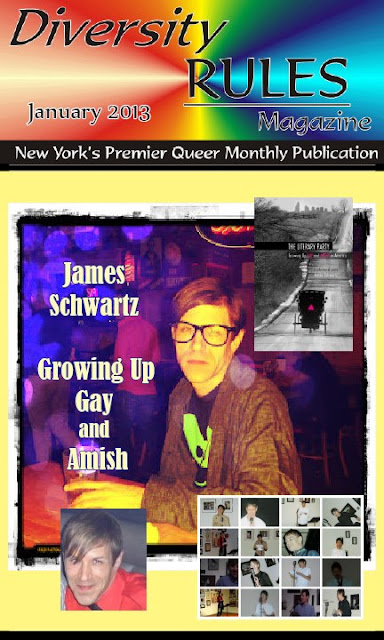
"The Literary Party: Growing Up Gay and Amish in America" Book Reviews + Media Highlights


BOOK REVIEWS:  


As a country boy in Kentucky, I’m acquainted with the Amish. Not well acquainted, but acquainted. I remember going with my grandfather to visit Amish farms and purchase produce during the summer months. I remember stopping by the stores to buy foodstuffs and other goods when passing through western Kentucky. Once, while en route to New York City, my parents decided it would be “fun” to take a detour through Pennsylvanian Amish country. 

The people were nice and provided tours, but I was young and, to this day, am not sure whether or not they were really Amish. I’ve often thought they were isolationists when it came to tourism but not commerce. Then, of course, there was the movie “Witness” that came out in the 80s, shedding a little more insight, albeit with questionable accuracy, into the Amish life.

 Perhaps one of my most vivid, but horrific memories with the Amish, was when my parents decided to venture into Indiana and purchase Amish furniture or woodwork or something. They drove around from town to town complaining that the stores were closed. Finally, my dad spotted an Amish family walking down the road and pulled up next to them. He rolled the window down and asked, “What in the hell is going on here? Why isn’t anything open?” One of them look horrified — and I was absolutely mortified as a teen experiencing father-induced embarrassment in the backseat. That’s when the lady said, “Today’s the Sabbath, sir.”
Of course. How could any of us forget?

Such is it when two cultures collide.  In hindsight, it seems like such a blatant faux pas. On the other hand, when I look back on all this, my whole Amish experience just seems wrong. It seems like a series of being on the outside looking in, as if a trip to Marion, Kentucky, was nothing more than a field trip to the zoo.
So, when James Schwartz sent me his collection of poetry about growing up gay and Amish, I had a feeling of angst and trepidation because of my own experiences. My fears were nearly solidified with the first poem, Answer to the Amish by John Updike:
Selling their wares to the tourist pack
Who gaze wonderingly upon the sect
As I moved forward, though, I found myself being put at ease with the other themes of faith, community, and exile, like in The Beginning:
I am but a child yet I know
What today I am to miss
And how far I have to go,
To find redemption at the border
Maybe it’s because of the Amish theme in the book, but reading lines like this struck up images of Christ entering the wilderness and self-exploration through exile.  Samuel, of course, is a blatant reference to Biblical Old Testament, complete with referenced scripture.  In Book of James, we’re told that “In life the lover begs only for bread. / His contentment found in relief and rhyme. / The role of the Muse is a role for the stage. / An epic arc of pathos and pure lust.”  There’s a hint here of desiring the basics, like “our daily bread,” that, in this case, feels unattainable.  Desire in itself should not be problematic since we are made in God’s image, at least the presumed take with the beautiful line “Human existence is not sacrilege.”

Perhaps its the connotation of reading poetry from a former Amish man (or is it once Amish always Amish, whether the community acknowledges you or not?) that conjures up these images and stirs the spiritual imagination, in which case my interpretations and impressions might be off base.  However, there’s also a sincere universality in the shared experience that shines through Schwartz’s poetry-in-exile.  True, homosexuality in and of itself can become a barrier between the communities and people we love.  Think of the gay Jamaicans, Russians, and Ugandans who are now “in exile.”  Of course, American readers of this blog needn’t travel that far.  There have been so many recent studies released lately that talk about the epidemic of homeless youth who have have been kicked out of their homes because of their sexual orientation.  However, Schwartz’s work is not just about being LGBT.  Some of his poems actually reminded me of post-colonial and ethnic lit I read way back in undergrad.

Take Something Forgotten (For Haiti).  When I read the lines “Inspiring a quaking folklore. / Something was forgotten” I felt the displacement Edwidge Danticat discusses in Breath, Eyes, Memory through Haitian-American storytelling.  Being Amish and being gay is unto itself a displacement, so there’s no wonder that, like in the previous poem, the narrator would consider entering the wilderness “to find redemption at the border,” outside an otherwise suffocating, to say the least, community, at least as it is tragically portrayed in the short story, “Gaymish.”  As with most survivors of “colonialism,” there’s the sense of being pulled in two different directions, although in Schwartz’ case it is a different experience since there’s a religious overtone, as in PUZZLES (PRIDE 2009 REMIX):
Through our carnage and through our calm,
I hear one voice in storm and Psalm.
At times cryptic and at others flamboyantly on-point, The Literary Party is a journey into what it means to attempt to assimilate in a new world.  “Today,” Schwartz writes in OUT & AMISH: an essay, “an Amish teen coming out within his community faces the complete loss of family and friends.  He also faces the loss of his faith community, which is literally their entire world [emphasis mine].”

Think about that.  The average (whatever that is) American teen comes out and is disowned by his family.  Perhaps they live in homelessness, are taken in by another family member, or pick up with a supportive network that was already in place.  Assume this teen is Catholic, Pentecostal, or Baptist.  I don’t know a lot about every religion, but I know enough about some religions to know an individual could still, for all intents and purposes, attend a church of their choosing and, if it was important enough for them, “fly under the radar” or “blend in the with the crowd” while dealing with whatever guilt their faith might be peddling — or not.  Heck, they could be completely reconciled with it all and not care what other people say.  Religion, I’ve found, is a great deal of interpretation when you’re taking your cues from of religious text.  What choice, though, does an Amish teen have in such a cloistered community after being excommunicated?  It’s a total loss of “their entire world” that results in being “very tortured.”  Schwartz declares in Colors in Cabaret that “Hate is a serpent spawned by men, / Only slain by the poet’s pen.”  He does his slaying by putting his experiences in verse and giving voice to other LGBT Amish folks.  There is encouragement and new found liberation and sense of community outside the community that shines through in Last Night a Drag Queen Saved My Life and Formidable.  Perhaps none say it best as these vivid lines from Colors in Cabaret:
I danced a decade away,
With the queens of the cabaret,
Because they painted it,
Beautiful colors.
It seems fitting that through self journey the poet revisits his roots and dares to reinterpret what he has learned through “remixed” poems, such as one of my favorites, Samuel (Remix).  Through the shadow of the poem, the poet applies a different interpretation to 2 Samuel 1:26.  There’s also a hint of retelling Leviticus in the lines from Labor of Beast:  A Sonnet:
To sodomize, sonnetize foe or friend.
Breeding and brooding we take to our den.
In the final sections of the poem, entitled “Love” and “Home,” I feel like we see Schwartz’ homecoming through an acknowledgment of what, here, ultimately keeps us anchored:  Our roots. 

 It’s here that I found some of the most in depth writing.  The poems are clearly personal, but do not feel of stale, regurgitated biography.  The Ninth Garden is a sorrowful calling out for a deceased mother.  I do not know the personal story of strife, other than from what is alluded to in the poems, of what it meant for him to leave his community, but the are clear that it was not easy.  There is little insight as to what it meant to his mother (who may have already been deceased at this time).  The poem, though, serves as a beautiful elegy to her and a tribute to the struggling and strife of missing someone, yet another acknowledgment of that shadowy displacement each of us must someday face.  Grief is personal, but its story is relevant to all of us, and one that is woefully visited in The Pale City:

  ”I left behind abandoned lovers, / They did not see me go, / I keep my silence still, / I have nothing left to show.”  

The theme shows up again in Winter Hawk, which pays homage to winter while also serving as an elegy for Schwartz’s father:

Far from elegy,
speckled hawk soars the sea.
The winter sun as blinding,
As a father’s love is binding.

Here, there is no outside looking in because Schwartz is “one of us.  We know, or will someday know, what it means to lose something or someone close to us.  With The Literary Party, Schwartz us how common we all are and how we are all a part of this party called life.

  I thank him for sharing his life experience and reminding me of our universality through his beautiful, dizzying, blinding, laughing, and grieving poetry.


(GOODREADS REVIEW BY T.M)


  I am not a poetry reader.  I do not seek out sonnets, couplets or prose.  I do not swoon at the mention of Shakespeare or Thomas-and the idea of attending a poetry reading makes me squirm.  I am the seeker of long and tedious novels that take me weeks to slog through.  But today-I am a poetry convert.  

James Schwartz has delivered a book so moving, so ‘dead on’ it’s hard to ignore.  His poems unfurl before you like gorgeous flowers you itch to pick.  Interjected three times throughout the book are strong short stories that give deeper insight to what it’s like to grow up gay and Amish.  Yet they read like longer poems.  James Schwartz takes you up the hill of measured language and then gives you a hard push to the bottom.  His poems span a life unknown to most of us, born into a culture that has room for Rumspringa but not for homosexuality.  We follow James as he encounters the usual passionate yens of youth;  sneaking off with a cute boy, getting caught out in a club by other gay youth, to his adult life as an out gay man dabbling in cabaret and drag.  We watch as he flexes the muscles of his identity with a sharp clarifying eye on those around him.

 Scattered throughout the book are photos of a young James and his family.  These photos lead the reader to believe that they are still close, exploding the myth that after an Amish gay youth comes out their family refuses contact with them.  In the book are two moving elegies to his mother and father that are almost hard to get through.
 The book is short and leaves you wanting more.  Eighty-four pages (including a forward and afterward) read easily in a night or two on a Nook for $3.95. Well worth it, since you will return to it again to memorize the pieces that are so smart and pithy you feel compelled to quote them.

Here is a small part (smacking of Dorothy Parker) that has become one of my favorites from “Midnight”:


I loathe the hours after dawn.
Before he’s out the door,
Having put on again,
What he was before.

Other poems read like chants and raps- to be read at a slam (something the author does).  But they all have one thing in common, a heat of brilliance that is not too bright to stare at, but way too hot to stand next to.


  (TABOO JIVE BOOK REVIEW) 


  I grew up in suburban Pennsylvania, and throughout my youth my parents would sometimes take me into Lancaster County for shopping. On long, windy roads next to farms and cornfields we’d pass horses and buggies. I’d ask my parents about the people who drove them. Why weren’t they in cars? Why did they dress so funny? What do you mean they don’t use electricity?

The beautiful thing about The Literary Party: Growing Up Gay and Amish in America is that it sheds light on the Amish experience in a way that is both deep and touching. The author, James Schwartz, was born gay in an Amish community, and struggled with his faith and sexuality. Most of his book is a compilation of poetry, but he also weaves some short stories throughout. Every passage—poetry or prose—tells a story about love, family, religion, or his unique life.

Back during my many trips to Lancaster, I never thought about how complex the Amish life could be, but Schwartz’s experience is eye-opening. He recounts his experimental gay childhood, and getting caught messing around with another Amish boy. He writes about going to nightclubs in his horse and buggy, and the feelings of rejection by his family and kin.

For someone who doesn’t normally read poetry books, I was touched by Schwartz’s collection. Not only is the poetry absorbing, but the content is unique and fascinating. If not for this book, how would I ever know about the experiences of the gay Amish? Schwartz has done a service to all the boys who are growing up in the same shoes as he, and I hope that he continues to write more about his unique life.

(LIVING OUT MAGAZINE)


With apologies to Max Weber and Margaret Mead, any armchair anthropologist or sociologist in North America worthy of cocktail party chatter will be able to explain the propensity of sub-groups and clans and tribes to gather into ever-tighter circles as the onslaught of cultural evolution broaches their sacred world-view. The Mormons did it in their westward trek in the 1840's, the Quakers, the Mennonites and the Jim Jones Temple folks and of course the Amish as well, all have their stories of hiding from the realities of the then-perceived world and its evils. The difficulty lays in the troubling fringe of each of these groups, how to control, guide, indoctrinate, and sublimate their individual members into compliance with group norms and expectations; Ross Douthat of the New York Times calls it the paranoia of the six-degrees of separation game. 


"The Literary Party: Growing up Gay and Amish in America" helps us to see into one of these uniquely American groups and the ways in which it builds tight walls of protection around their world-view by destroying the internally unacceptable. James Schwartz shares with us a view point that is at the same time unique, fascinating, real, and also horrifying, as a young gay man growing up in a traditional Amish farm family. His voice, and his story, which we are allowed to glimpse through his poetry, helps us to understand what it may be like for such a cloistered view of the world from the inside out.

Certainly every such group in American history has similarities, familiar trajectories, and expected time sequences: a coming-of-age story in any other setting, East Los Angeles, for example, or Bedford-Stuyvesant, or Salt Lake City, may stand on similar ground. What helps us appreciate the struggle of Schwartz' "Literary Party" is the rare insight that is current, fresh, and authentic. I am still upset at Tim Allen and Kirstie Allie for that horrible "For Richer or Poorer" (1997), and I also have to suggest that all of hip-hop and rap combined may not be as authentic as we wish it to be, at least in an anthropological sense. I am still waiting for the Langston Hughes of the twenty-first century, and I am not at all sure that even Martha Beck, with her brilliance, is an authentic Mormon voice either.

Conversely, Schwartz seems to have made the transition to the mainstream American cultural highway fairly easily: "In this time and at this rate/ the world prefers its assassins str8./ Heros for heteros to relate/ comfort for their grieving mate." Poetry is elastic, no matter which culture upon which it focuses nor from which it may be derived, and as a reader, my experience, world view, politics, religion, sexuality, age, and ethnicity all come to bear upon the machinations of my interpretation of any poetry, and in Schwartz' work I can reflect on not simply what he meant to say, but what the poetry is saying to me right now and right here. The inferred message is, an Amish gay man can speak to me and we can share some universality of human emotion and cross-cultural meaning, and succeed in making the world a little easier to deal with and a little easier to negotiate.

I am eager to see the maturation of this poet; in "The Pale City" ("From the pale city/ beside the sea/ I traveled once more home/ to the fields in hues of tea") helps us see the future of James Schwartz, an authentic American voice, and that uniquely individual voice as well.


PHOTO: NYT 

INTERVIEWS / MEDIA HIGHLIGHTS: 


The Literary Party Kindle eBook!


Need a summer read? I have recieved several queries (from Plain Rainbows) about my book of poetry, photos, essays & a short story "The Literary Party: Growing Up Gay and Amish in America", published via inGroup Press a decade ago. 


EDGE MEDIA BOOK REVIEW:

With apologies to Max Weber and Margaret Mead, any armchair anthropologist or sociologist in North America worthy of cocktail party chatter will be able to explain the propensity of sub-groups and clans and tribes to gather into ever-tighter circles as the onslaught of cultural evolution broaches their sacred world-view. The Mormons did it in their westward trek in the 1840's, the Quakers, the Mennonites and the Jim Jones Temple folks and of course the Amish as well, all have their stories of hiding from the realities of the then-perceived world and its evils. The difficulty lays in the troubling fringe of each of these groups, how to control, guide, indoctrinate, and sublimate their individual members into compliance with group norms and expectations; Ross Douthat of the New York Times calls it the paranoia of the six-degrees of separation game. 


"The Literary Party: Growing up Gay and Amish in America" helps us to see into one of these uniquely American groups and the ways in which it builds tight walls of protection around their world-view by destroying the internally unacceptable. James Schwartz shares with us a view point that is at the same time unique, fascinating, real, and also horrifying, as a young gay man growing up in a traditional Amish farm family. His voice, and his story, which we are allowed to glimpse through his poetry, helps us to understand what it may be like for such a cloistered view of the world from the inside out.


Certainly every such group in American history has similarities, familiar trajectories, and expected time sequences: a coming-of-age story in any other setting, East Los Angeles, for example, or Bedford-Stuyvesant, or Salt Lake City, may stand on similar ground. What helps us appreciate the struggle of Schwartz' "Literary Party" is the rare insight that is current, fresh, and authentic. I am still upset at Tim Allen and Kirstie Allie for that horrible "For Richer or Poorer" (1997), and I also have to suggest that all of hip-hop and rap combined may not be as authentic as we wish it to be, at least in an anthropological sense. I am still waiting for the Langston Hughes of the twenty-first century, and I am not at all sure that even Martha Beck, with her brilliance, is an authentic Mormon voice either.


Conversely, Schwartz seems to have made the transition to the mainstream American cultural highway fairly easily: "In this time and at this rate/ the world prefers its assassins str8./ Heros for heteros to relate/ comfort for their grieving mate." Poetry is elastic, no matter which culture upon which it focuses nor from which it may be derived, and as a reader, my experience, world view, politics, religion, sexuality, age, and ethnicity all come to bear upon the machinations of my interpretation of any poetry, and in Schwartz' work I can reflect on not simply what he meant to say, but what the poetry is saying to me right now and right here. The inferred message is, an Amish gay man can speak to me and we can share some universality of human emotion and cross-cultural meaning, and succeed in making the world a little easier to deal with and a little easier to negotiate.


I am eager to see the maturation of this poet; in "The Pale City" ("From the pale city/ beside the sea/ I traveled once more home/ to the fields in hues of tea") helps us see the future of James Schwartz, an authentic American voice, and that uniquely individual voice as well. 

Available as a Kindle eBook!

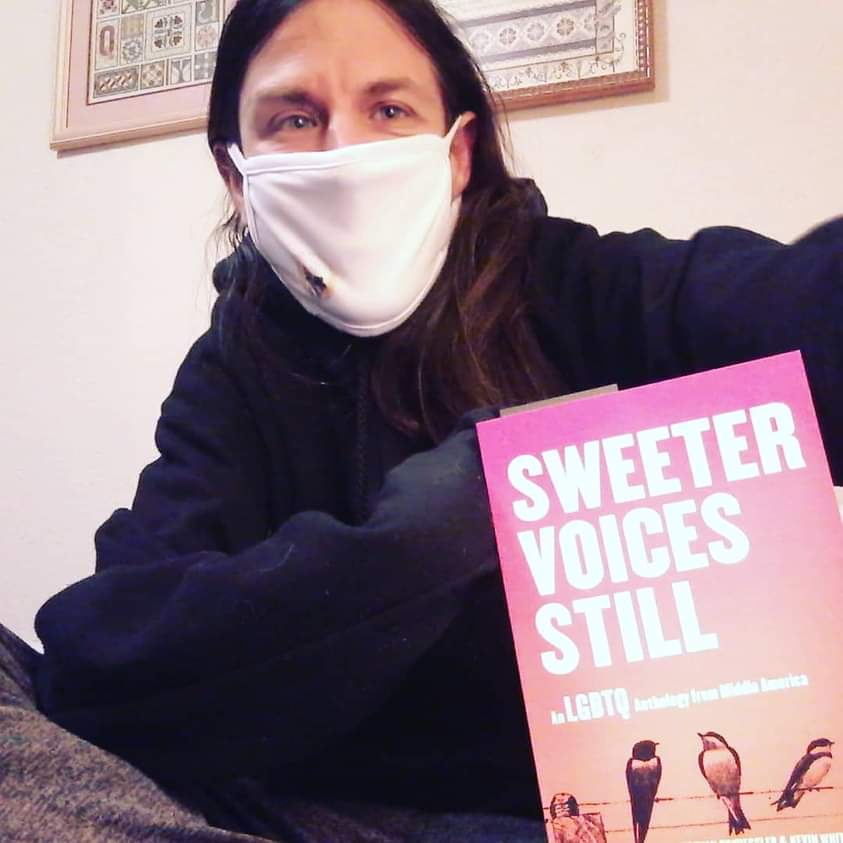
"Sweeter Voices Still: An LGBTQ Anthology from Middle America" Reviews


 Happy publication day to SWEETER VOICES STILL! I am so happy for all the buzz and great reviews it has been receiving, updates to come: 

THE BUCKEYE FLAME 

FOURTEEN EAST MAGAZINE

LITHUB (EXCERPT)

LEFT BANK BOOKS DISCUSSION (FB LIVE) 

LITTLE VILLAGE

NPR

I am also happy to share space with another gay Amish writer, a first for me! Don't miss Letter to the Prodigal Son by Anonymous! 

Overground / Underground Megamix

Overground Underground #1 will be released on Tuesday 15th September in both print and e-book editions. To celebrate, we have created a megamix of every word-based work included in the issue, featuring snippets from Cailey Rizzo, Katy Haas, Kat Payne Ware, Declan Toohey James Schwartz, Mark Goodwin, Emiliano Russianey, Toby Mercer, Lucy Duffell, Thomas M. Tayler, Thomas Crofts, Ian Seed, Gregory Betts, Helen Frank, Mark Bolsover, Izzy Edwards, Richard Capener, Matthew Thomas Smith, Hannah Star Rogers, Claire Orchard, Wilson Koewing, David O’Connor, Dale Cooper Whitfield, Rae Joyce, Rue Baldry and Kieran Johns. 

 Via OU BLOG


Dispatch from Hawaii #19: Our Town

Below: Attending the recent Hilo Player's theater production of OUR TOWN, the first time in 3 decades that Thorton Wilder's classic play has been performed in Hawaii!

With Professor Willard (Lowden Borgens) 


A Year of Aloha 🌺


I'll be on a social media / blogging hiatus, beginning in December to focus on my next project so here is a look back at a few highlights from the Big Island, 2019 - A Year of Aloha:


PUNATIC (WRITING KNIGHTS PRESS)

POETRY + COLOR PHOTOS
EXCERPT:


THE MERRIE MONARCH PARADE


FROM PAHOA WITH LAVA 4 
DOCUMENTARY FILM (NA LEO TV)


#PROTECTMAUNAKEA


PRINCESS FOR POTUS!


University of Pu'uhuluhulu

I made it to the University of Pu'uhuluhulu yesterday for two classes, a geology class and How to Be A Better Haole and had an amazing time!


From Pahoa with La❤a + Lovejets πŸŒ‹


I am celebrating Walt Whitman and my 2 year anniversary in Puna! You can catch me in the Nā Leo TV documentary film FROM PAHOA WITH LA❤A 4πŸŒ‹ premiering in May on Nā Leo TV (check local listings) + the @NaLeoTV app + Facebook & YouTube platforms!


LOVEJETS: QUEER MALE POETS ON 200 YEARS OF WALT WHITMAN 
(Squares & Rebels Press)

Where the heck have you been, Walt Whitman?

Walt Whitman, author of Leaves of Grass, was born in 1819. The Stonewall riots happened 150 years later. On the bicentennial of Whitman’s birth and the 50th anniversary of Stonewall, over 80 poets pay homage to not only Walt Whitman, but also to queer poets and queer poetry and the vast and various events, revolutions public and private, that have shaken our world since 1819: who we are, where we are, where we have been, and where we might be going in the 21st century.

“This wide and impressive range of poetry echoing the spirit of Walt Whitman and his literary forebears demonstrates the essential embrace of community that we’ve always needed to feel whole with ourselves and among others, especially now during these tumultuous times. Celebrating what had to be largely hidden from view during Whitman’s day, the living queer male poets who grace the pages trumpet a glorious and unforgettable spectacle of passion and compassion.” —Richard Blanco, Presidential Inaugural Poet

Featured poets include Shane Allison, Jeffrey Angles (translator), M. J. Arcangelini, Geer Austin, Stuart Barnes, David J. Bauman, Jeffery Beam, Gary Boelhower, Charlie Bondhus, Bryan Borland, Jericho Brown, A. J. Chilson, Philip F. Clark, Jeffery Conway, Alfred Corn, David Cummer, Gavin Geoffrey Dillard, Patrick Donnelly, Arthur Durkee, Jim Elledge, Jack Fritscher, Keith Garebian, Alex Gildzen, Robert L. Giron, David Groff, Nicholas Alexander Hayes, Trebor Healey, Greg Hewett, Scott Hightower, Walter Holland, Andrew Howdle, Michael Hyde, George K. Ilsley, Curran Jeffery, Jee Leong Koh, Michael Lassell, Travis Chi Wing Lau, Daniel W.K. Lee, Timothy Liu, Chip Livingston, Raymond Luczak, Jeff Mann, Jaime Manrique, Herbert Woodward Martin, Marcos L. MartΓ­nez, Dermot Meagher, Jory Mickelson, Stephen S. Mills, Michael Kiesow Moore, SP Mulroy, Chael Needle, Eric Thomas Norris, Margaret Sayers Peden (translator), James Penha, Seth Pennington, Felice Picano, Martin Pousson, Christopher Records, William Reichard, Dennis Rhodes, Rocco Russo, Roberto F. Santiago, Gerard Sarnat, James Schwartz, P. C. Searce, Davis G. See, Gregg Shapiro, Ben Shields, Allen Smith, Michael D. Snediker, Frederick Speers, Malcolm Stuhlmiller, Mutsuo Takahashi, Atsusuke Tanaka, Guy Terrell, Ulysses Tetu, John Whittier Treat, David Trinidad, Mark Ward, Edmund White, Walt Whitman (of course!), Scott Wiggerman, Jim Wise, Cyril Wong, and Ian Young.

Featured Post

"The Literary Party: Growing Up Gay and Amish in America" Book Reviews + Media Highlights

THE LITERARY PARTY: GROWING UP GAY AND AMISH IN AMERICA  (EBOOK)   BOOK REVIEWS:   As a country boy in Kentucky, I’m acquainted with the Ami...